
VCE Study Score Calculators

VCE Physics Study Score Calculator

Every wondered what your VCE Physics Study Score might turn out to be? Have a try out our free calculator, based off of historical data from VCAA. See how the Unit 3 SACs, Unit 4 SACs and the final VCE exam correlate to your potential final study score.
Learn how VCE Physics Study Scores are Calculated...
Estimate my Study Score
Thank you! Your submission has been received!
Oops! Something went wrong while submitting the form.
Your Estiamted Study Score is...
--
This is an estimate based on historical data. Your actual study score is determined by VCAA's final moderation.
What can I do to boost my Physics Study Score?
Practice makes perfect when it comes to VCE Physics - and there's no better practice than free resources!
Sign up to our mailing list today to be first in line to receive AOS Summaries, cheat sheets, challenging practice questions with worked solutions and blogs and guides from our expert tutors directly to your inbox.
No spam guaranteed. Forever Free.
Thank you! Your submission has been received!
Oops! Something went wrong while submitting the form.

How is the VCE Physics Study Score Calculated?

Your final VCE Maths Methods study score isn't just a simple average of your marks; it is a weighted ranking compared to every other student in the state. To arrive at your final score out of 50, VCAA looks at three primary Graded Assessments (GAs):

  • Unit 3 SAC Scores (30%): Your Unit 3 SACs make up a significant portion of your grade. Note that these are statistically moderated by VCAA based on your cohort's exam performance to ensure a level playing field across different schools.
  • Unit 4 SAC Scores (20%): Since VCE Physics only has one final exam, the second mark weighting is allocated to your Unit 4 SACs. This unit however sees a slightly lower percentage than Unit 3, given that there are only 2 SACs rather than 3.
  • Final Examination (50%): This final 2-hour exam from VCAA allows for the use of your scientific calculator and an A3 cheat sheet. This paper focuses on the application of concepts to complex, extended-response scenarios, with an emphasis on the extended practical investigation (from Unit 4 AOS 2).

Once your raw scores are combined according to these weightings, they are mapped onto a normal distribution curve (the "bell curve"). A score of 30 represents the state average, while a score of 40 or above places you in the top 9% of all Victorian students. It is important to keep in mind that your final study score is a reflection of your state ranking rather than just your raw percentages, so consistent performance across both your school SACs and the final external exams is the key to a raw 40+ result.
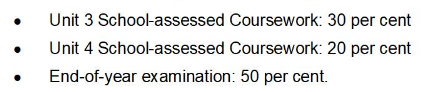
VCE Maths Methods Assessment Weighting Study Score
Source: VCE Physics Study Design (VCAA, 2023)